
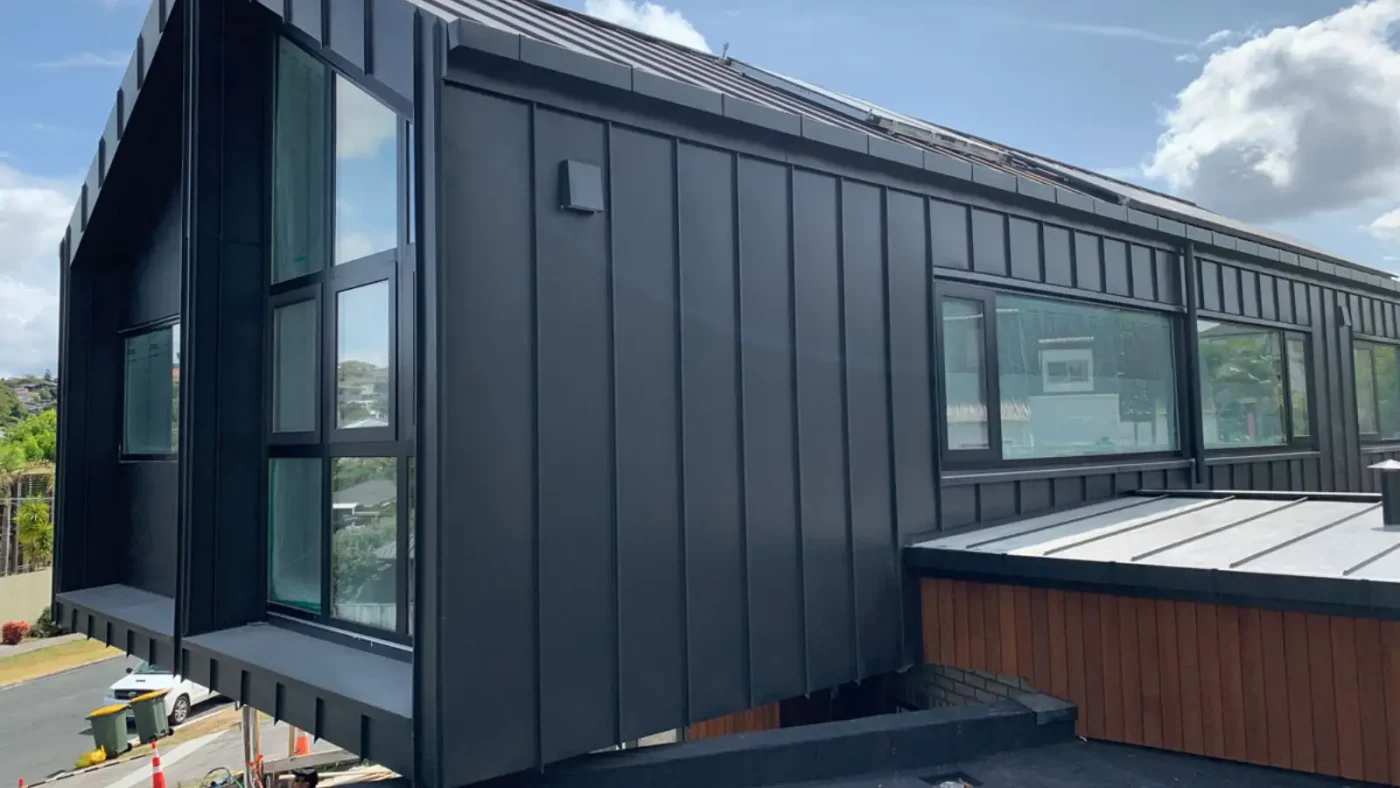
Planning a new build, renovation, or full reclad in Auckland? Cladding is one of the most consequential decisions you’ll make. It’s the most visible surface on your building and the one that stands between your structure and the weather.
Get it right, and you won’t think about it again for decades.
Auckland’s conditions are genuinely tough on buildings. Salt air, high rainfall, wind, and the long memory of the leaky building era all raise the stakes here more than in most of New Zealand.
The long-term solution? Exterior wall cladding.
What Is Exterior Wall Cladding?
Exterior wall cladding is the outer skin of a building. It’s fixed over the structural walls to keep water out and protect the frame from moisture damage. It also plays a role in insulation, structural bracing in some systems, and how the building looks.
Why Do Auckland Homes Need Different Cladding to the Rest of NZ?
Auckland gets around 1,200mm of rain a year. Our humidity sits among the highest of any major New Zealand city. Coastal suburbs like the North Shore, Devonport, St Heliers, and Mission Bay add salt air into the mix year-round. That combination breaks down unsuitable materials faster than most people realise.
UV exposure is another factor that often gets overlooked. Auckland sits at a latitude where UV intensity is significantly higher than in many comparable cities globally. That matters for cladding because prolonged UV exposure fades paint finishes, degrades certain timber treatments, and accelerates cracking in materials not rated for high-UV environments.
Wind zone matters too. Much of Auckland falls into the medium-to-high classification. Waterfront sites, ridgelines, and exposed peninsulas score higher. Wind-driven rain with salt is especially hard on systems where screws penetrate the surface or joints rely on face-sealing.
Then there’s the ‘leaky building’ issue. Around 42,000 New Zealand homes were caught up in the weathertightness crisis of the late 1980s and mid-2000s. Nearly all had monolithic cladding installed without a drained cavity. That era shaped the building code requirements every project must now satisfy.
Types of Exterior Wall Cladding Available in NZ
Weatherboard (Timber, Fibre Cement, uPVC)
Weatherboard is the most common residential cladding in New Zealand. Horizontal lapped boards suit both traditional villas and contemporary new builds.
Timber looks great but needs repainting every 5–7 years and suits sheltered sites best. Fibre cement handles dark colours without warping, performs well in coastal conditions, and needs a repaint every 10 years or so. uPVC requires almost no maintenance but has limited design flexibility.
Cost: around $200–$300/m² installed for fibre cement.
Brick and Brick Veneer
Brick is tough, needs almost no upkeep once laid, insulates well, and holds up in salt air. Brick veneer gives a similar look in a lighter, faster-to-install format. This makes them common in contemporary residential builds in Auckland.
Cost: $230–$330/m².
Metal Wall Cladding (Standing Seam and Interlocking Panels)
Metal is one of the best choices for wall cladding in Auckland. It lasts long, needs very little upkeep, and handles the city’s coastal conditions well. Aluminium, zinc, and copper systems arrive factory pre-painted or pre-finished. There’s nothing to paint on site.
Aluminium is the go-to for coastal Auckland. Salt air doesn’t corrode it. It’s lightweight, holds its finish for decades, and is the most widely used metal cladding option across Auckland residential and commercial builds.
Zinc builds up a natural patina as it ages. The finish is matte, self-healing, and needs zero maintenance. It suits architectural and high-end residential projects where a European-style aesthetic is the goal.
Copper is the top-end option. It’s incredibly durable, develops a rich verdigris finish over time, and can last well over 100 years. It’s typically chosen for landmark or bespoke projects where both longevity and visual impact matter.
All three can be installed as standing seam profiles or interlocking wall panels. I.G. Roofing fabricates panels on-site with our own machinery, allowing us to handle custom sizing and quality control in-house on every job.
For more on how these systems work, see our article on standing seam roof and wall cladding, or visit our interlocking wall panels page.
Cost: $220–$400+/m² depending on material and profile.
Fibre Cement Panels
Large-format flat panels are popular in modern commercial and residential builds. They are good in coastal conditions, handle dark colours well, and are highly durable. James Hardie’s Axon, Stria, and Linea are the most common products across Auckland.
Cost: $200–$400/m².
Plaster and Stucco (Monolithic Systems)
Plaster and stucco cladding create a seamless, smooth exterior finish applied over substrates such as fibre cement sheet or plywood. It’s been used in New Zealand since the 1920s and remains popular for its clean, modern look and design flexibility. When properly specified and installed, it’s a durable and fully code-compliant option.
Cost: $160–$250/m² depending on substrate and finish.
Natural Stone and Stone Veneer
The premium end of the market. Non-porous, low maintenance, and built to last. Full stone is heavy and labour-intensive. Stone veneer delivers a comparable finish faster and at a lower price.
Cost: $470/m² for stone veneer panels, $570/m² for loose stone.
What the NZ Building Code Requires
Picking a cladding material because it looks great is a good start. But in Auckland, looks alone can get you into serious trouble.
The city’s salt air, wind exposure, and rainfall mean that not every material performs equally on every site. New Zealand’s Building Code reflects that. E2/AS1 (External Moisture) sets out what your cladding system must actually achieve, not just what it looks like. The 4th edition, effective July 2025, made drained and vented cavities mandatory on most timber-framed buildings. A minimum 20mm air gap behind the cladding is now a baseline requirement, not an optional extra.
Before any material gets chosen, your site needs to be scored against the E2/AS1 risk matrix. It considers:
- Wind zone
- Coastal exposure
- Building height
- Roof-to-wall junctions
- Deck connections
That score determines your cavity depth, flashing specifications, and which products are actually approved for your site. A material that works perfectly on a sheltered Mt Eden property may not be suitable on an exposed North Shore site two kilometres away.
This is exactly where a licensed builder earns their value.
We read the site conditions, run the compliance requirements, and spec a system that meets both your design goals and your Building Code obligations. Our licensed builders handle the full process from reading your site through to final installation, so the cladding you choose will actually perform where you’re building. And you won’t be paying for the same job twice.
Exterior Wall Cladding Costs in NZ
Figures are approximate, GST-inclusive, and based on supply and installation on a standard flat site.
| Cladding Type | Approx. Cost (Supply & Install, incl. GST) | Maintenance Level |
|---|---|---|
| Corrugated metal | Under $80/m² | Very low |
| Fibre cement weatherboard | $200–$300/m² | Low |
| Brick/brick veneer | $230–$330/m² | Very low |
| Fibre cement panels | $200–$400/m² | Low |
| Aluminium standing seam/panels | $220–$400+/m² | Very low |
| Zinc standing seam/panels | $300–$500+/m² | None |
| Copper standing seam/panels | $500–$800+/m² | None |
| Natural stone veneer | $470/m²+ | Very low |
| Loose natural stone | $570/m²+ | Very low |
With these numbers that could run up your bill, is premium wall cladding really worth it?
Here’s something most people get wrong: cladding is not the budget-buster it’s assumed to be. It typically makes up less than 10% of the total build cost. The difference between a basic option and a premium, low-maintenance system is much smaller than people expect.
Complex rooflines, high window counts, and coastal locations all contribute to higher costs for exterior wall cladding.
The smarter comparison isn’t just upfront cost per m². It’s installed cost plus maintenance over 20–30 years. A cheaper material that needs repainting every few years can easily cost more in total than a premium system that requires no maintenance.
Poor installation makes any material expensive. Our licensed builders have 37 years of experience getting the spec right the first time, saving you from remediation costs down the track.
Get in touch for a no-pressure conversation about what suits your site and budget.
How to Choose the Right Wall Cladding for Your Auckland Project
- Start with your site. Run the E2/AS1 risk matrix before looking at any product. Wind zone, coastal exposure, and building height set your minimum performance requirements.
- Be realistic about maintenance. Some materials need professional repainting every 5–7 years. Others need nothing for decades. Plan for what you’ll actually do.
- Think about colour early. Dark colours require fibre cement or metal, as timber absorbs heat under dark paint and warps in the Auckland sun. On the other hand, light colours give you more flexibility across materials, but UV exposure will fade cheaper paint finishes faster than most people expect. The colour you choose affects which materials will actually hold up over time.
- Think in lifecycle costs. A low purchase price with regular maintenance often costs more over 30 years than a premium low-maintenance system.
- Ask about fabrication. LBP licensing matters, especially for metal systems. Ask whether panels are fabricated in-house or outsourced. In-house means tighter tolerances and clearer accountability. With 37 years of European-trained expertise, IG Roofing works across zinc, copper, aluminium, and steel without being locked to any single brand. The spec follows the project.
Frequently Asked Questions
What is the most popular exterior wall cladding in Auckland?
Fibre cement weatherboard and brick veneer have traditionally dominated residential builds in Auckland. But metal cladding, particularly aluminium, zinc, and copper standing-seam and interlocking-panel systems, is growing fast across both residential and commercial projects.
Do I need consent to replace my exterior wall cladding in Auckland?
Generally, yes for a full reclad. However, small like-for-like replacements may not require consent. Check in with our team so we can help you out.
What exterior wall cladding is best for a coastal Auckland property?
Aluminium metal cladding and fibre cement. Both resist corrosion and require minimal upkeep in exposed locations such as Devonport, Takapuna, and Waiheke.
What is the cheapest wall cladding option in Auckland?
Corrugated steel at under $80/m². For residential use, fibre cement weatherboard offers the best balance of cost, durability, and aesthetics.
Let’s Talk About Your Wall Cladding Project in Auckland!
Auckland is one of the most demanding environments in New Zealand for exterior wall cladding. Salt air, high rainfall, UV exposure, and strict Building Code requirements mean the wrong material on the wrong site is an expensive mistake. The right choice, installed correctly, is something you genuinely won’t have to think about again for decades.
That’s the difference between choosing on aesthetics alone and choosing with your site conditions, maintenance tolerance, and long-term budget in mind.
Our team has been installing architectural metal cladding across Auckland for 37 years. Our licensed builders fabricate panels on site with their own machinery, work across aluminium, zinc, and copper without being tied to a single brand, and manage the full process from specification to installation. You get the right system for your specific site, not the easiest one to sell.
Browse our completed roofing projects in Auckland to see the work first-hand. Or get in touch for a quick conversation about what works for your site and budget.
