
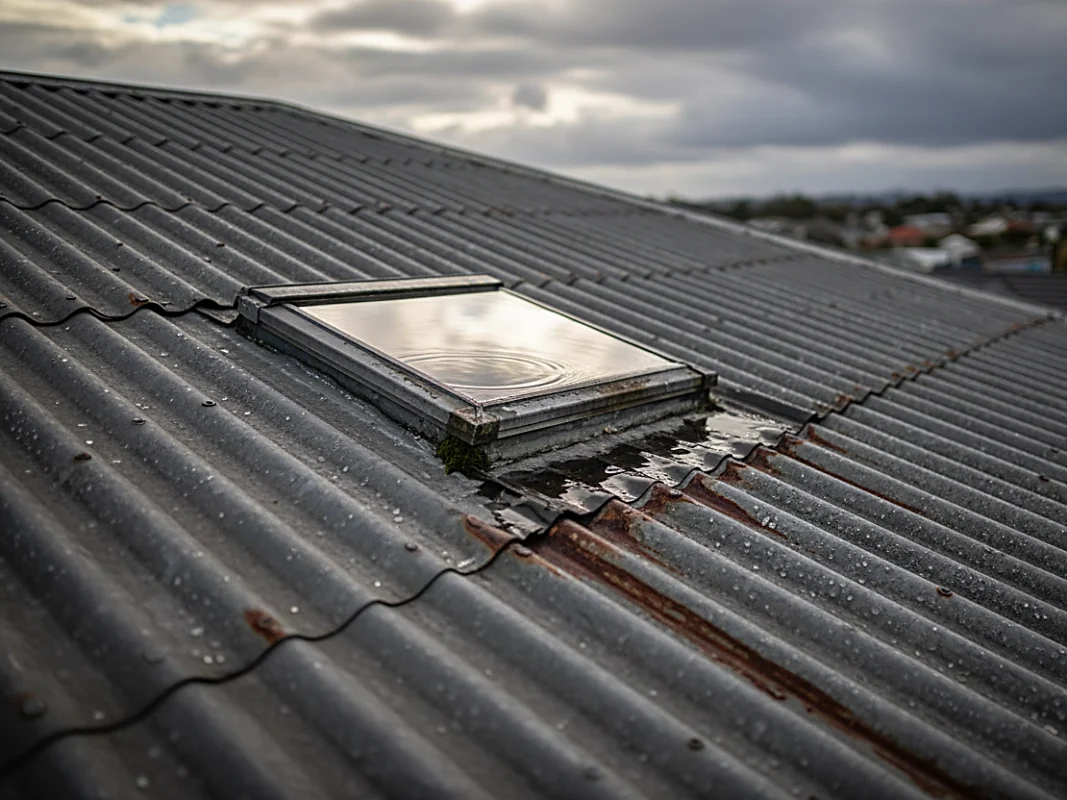
A roof leak repair is the most important maintenance task you can perform before the rainy season begins. Small drips often hide significant structural damage that remains invisible to the untrained eye during dry weather. You must address these minor issues now to prevent expensive emergency call-outs when heavy rain arrives.
Taking action today ensures your property remains a safe and dry sanctuary for your family year-round. It is much easier for a professional to fix a transition or a flashing during a clear week.
Avoid the stress of placing buckets under your ceiling during a midnight thunderstorm in July. Proactive roof leak repair preserves the total value of your biggest financial asset while providing essential peace of mind.
Before you dive into the details, here are the things you will learn from this guide:
- Why water stains on your ceiling rarely sit directly beneath the actual hole in your roof.
- How coastal gales push rain sideways and upwards into “random” entry points.
- Typical price ranges for local repairs and why early intervention prevents five-figure structural failures.
Why Auckland Leaks Get Worse In Winter
The NIWA winter rainfall share shows that Auckland receives a massive portion of its annual precipitation during the colder months. This constant moisture means that your roof never truly dries out between frequent weather fronts and coastal showers. Small entry points that seemed fine in summer quickly become major highways for water during these long wet spells.
How water travels and shows up away from the entry point
Water does not always drop straight down from the hole into your living room or kitchen. It often hits a rafter and travels several metres horizontally before it finally saturates your ceiling plaster. This tracking behaviour makes it very difficult for a homeowner to pinpoint the actual source of the leak.
Quick safety note before you check anything
Do not climb on wet or steep roofs under any circumstances as the surfaces are incredibly slick. If you see sagging ceilings or active dripping near light fittings, you must call a roofer immediately. Mould spread is another serious red flag that requires professional intervention to protect your respiratory health.
Sign 1: Water Stains On Ceilings And Bubbling Paint
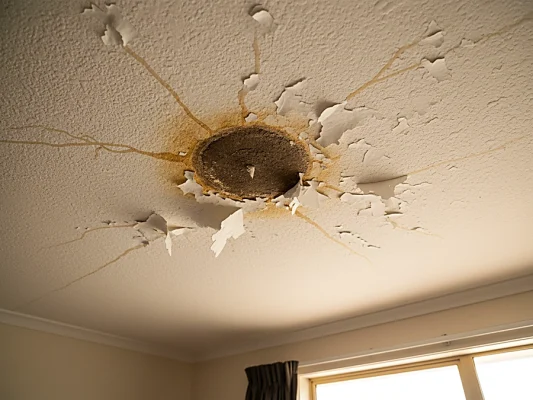
What you may notice indoors
Look for distinct brown rings or yellowish damp patches that appear on your white ceiling boards. These stains often start small but expand every time a new rain cloud passes over your suburb. You might also see paint bubbles that feel soft or squishy when you apply light finger pressure.
What it often points to
These marks usually point to a slow leak that has been saturating your building materials for weeks. Water often tracks along the timber framing until it finds a low point to settle and soak through. This can indicate a flashing issue or a slow failure requiring a roof repair to resolve.
What to do next
Take clear photos of the damage to show your contractor and help them understand the leak history. Mark the edges of the damp patch with a pencil to see if it grows during the next storm. Once you have gathered this information, you should book an inspection to confirm the roof leak repair requirements.
Sign 2: Loose Or Rusted Roofing Iron And Failing Roofing Accessories
External clues that homeowners miss
Walk around your property and look for orange or brown rust streaks running down your metal sheets. These streaks indicate that the protective coating has failed and the underlying steel is now actively corroding. These tiny gaps are more than enough to necessitate a professional roof leak repair before winter starts.
Why flashings and fixings fail first
Flashings appear as a top leak source in Auckland-focused content because they handle the most difficult water transitions. They endure constant thermal expansion and contraction which eventually breaks the waterproof seals and joints. Fixings fail because the rubber washers perish after years of exposure to the harsh New Zealand sun.
Repair options a roofer may use
A qualified professional might choose to reseal or replace damaged flashings to restore the original water-shedding path. They will often replace old fasteners with modern screws that feature improved weather-sealing technology. Fixing these accessories is a vital part of a comprehensive roof leak repair strategy.
Sign 3: Blocked Gutters Causing Water Pooling
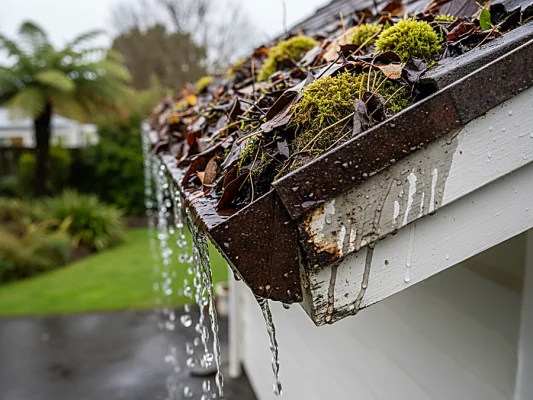
What water pooling looks like
Look for overflow marks on the exterior of your gutters or white mineral deposits on the metal surface. You may see water spilling behind the gutters and running down the side of your house during rain. Damp soffits or constant dripping at the eaves are major warning signs for your roof repair plan.
Why gutters link to roof leaks
Gutters redirect roof water away from your home to prevent water damage and related issues throughout your home’s structure. When these channels are blocked, the water has nowhere to go and often backs up under your roofing sheets. Well-made gutter systems are essential for protecting your foundation and preventing a roof leak repair.
What to do this week
Clear any visible debris from your ground-level drains if it is safe for you to reach them. Use a garden hose to check if the water is flowing freely through your downpipes and away from the house. If you notice any overflow returning, you must book a professional gutter check to avoid a roof leak repair.
Sign 4: Musty Smells Or Damp Insulation In The Roof Space
Hidden clues
A strong musty odour when you open your manhole is a classic sign of a long-term moisture problem. You should check if your insulation feels heavy, damp, or clumped together in specific areas of the attic. These hidden clues tell you that a roof leak repair is overdue, even if you do not see ceiling stains.
Why this matters before winter
Cold winter air trapped in a damp roof space creates massive amounts of condensation on your internal surfaces. This moisture accelerates the rotting of your structural timbers and destroys the overall insulation value. Fixing the leak now allows the space to dry out before the humidity levels rise.
When it is not a roof leak
Sometimes the dampness is actually caused by poor ventilation rather than a physical hole in your roofing material. Condensation from bathrooms or kitchens can get trapped in the roof space and mimic the signs of a leak. A roofer can confirm the difference by checking for specific entry points versus general moisture buildup.
Sign 5: Leaks That Appear Only With Wind-Driven Rain, Or Around Penetrations
Common weak points
Skylights and vent pipes are frequent trouble spots because they break the continuous surface of your roofing iron. Junctions where different roof planes meet are also highly susceptible to water ingress if the flashings are not perfect. These areas often require a targeted roof leak repair to ensure the seals are completely watertight.
Why leaks seem random
Wind pushes water sideways and can force it up over the protective lips of your flashings or under the laps. This explains why your roof might stay dry during a vertical downpour but leak during a blustery coastal gale. The pressure of the wind acts like a pump that drives moisture into tiny gaps.
The fastest way to confirm
Note the exact weather pattern and wind direction when you first notice the moisture entering your home. Share this information with your contractor so they can simulate the conditions during their diagnostic inspection. Requesting a professional inspection is the only way to ensure these issues receive a permanent roof leak repair.
Average Cost Of Roof Leak Repair Services In New Zealand
Typical price drivers
The type of material on your home will greatly influence the final cost of any roof repair work. Metal roofs are often easier to repair than intricate tile systems that require specialised replacement pieces and matching mortar. Height and access difficulties can also increase the price if the team needs to install safety scaffolding.
Indicative NZ examples
The average cost of roof leak repair services in New Zealand typically ranges from $150 for minor fixes to over $500 for complex issues. Auckland repair ranges are often quoted broadly, such as $1,000 to $5,000, depending on the conditions of the existing roof. Prices vary by site conditions, and the roofer should always confirm the total after an inspection.
Repair Vs Roof Restoration In Auckland: How To Tell Which You Need
When repair is usually enough
A simple roof repair is typically the right choice if you have a single, clearly defined leak point. If the rest of your roofing material is sound and rust-free, there is no need for a full overhaul. You can learn more about these options by reading this for local homeowners.
When restoration becomes the smarter route
Roof restoration in Auckland becomes the smarter route if you are dealing with repeated leaks in multiple areas of your home. A full roof restoration addresses problematic areas completely, while refreshing the overall appearance of your home.
Before-Winter Checklist For Homeowners (Auckland)
- Check ceilings and paint for any new brown stains or soft bubbles.
- Check gutters and downpipes for leaves, moss, or signs of standing water.
- Look for rust streaks and loose fixings from the safety of the ground.
- Check the roof space for moisture or musty smells after a light rain.
- Book an inspection before long wet spells.
When To Call A Roofer In Auckland
You should reach out for professional help the moment you notice active dripping from your ceiling boards. A ceiling sag is a structural emergency that indicates a massive amount of weight is sitting on your plasterboard. Staying ahead of the weather is the most effective way to manage your property and ensure long-term structural health.
Visit the page to book your pre-winter check today. Professional teams recommend periodic inspection and maintenance to catch these issues before they turn into expensive emergencies for your family. This proactive step ensures your home remains protected and your roof leak repair needs are met.
FAQs
How do I tell if a ceiling stain comes from a roof leak or something else?
Roof leaks usually grow larger, specifically during or immediately after a period of rainfall in your area. A roofer can check the space above the stain to see if there is a clear path for a roof leak repair.
Can blocked gutters really cause roof leaks in Auckland?
Yes, blocked gutters are a primary cause of water entering the home through the eaves and the lower roof line. This creates a situation where you need a roof repair purely because the drainage system failed.
Should I get roof leak repair done before winter, even if the leak seems minor?
You should always address a minor leak before winter because the constant rain will only make the hole larger. Performing a roof leak repair now is much cheaper than dealing with a major failure later.
