


Your roof is your home’s first defence against harsh weather, so choosing the right roofing profiles NZ homeowners trust is one of the most important decisions you’ll make. A roofing profile is the shape of the metal sheet, and it directly affects how water drains, how well the roof handles wind, and the overall look of your property.
Finding a solution that balances these technical demands with aesthetic appeal requires expert guidance. At IG Roofing, we bring over 37 years of combined European craftsmanship and local New Zealand expertise to every project. We go beyond standard installation. We design, fabricate, and install premium architectural systems, such as standing seam, to ensure your roof performs perfectly against the elements.
Common Roofing Profiles in New Zealand
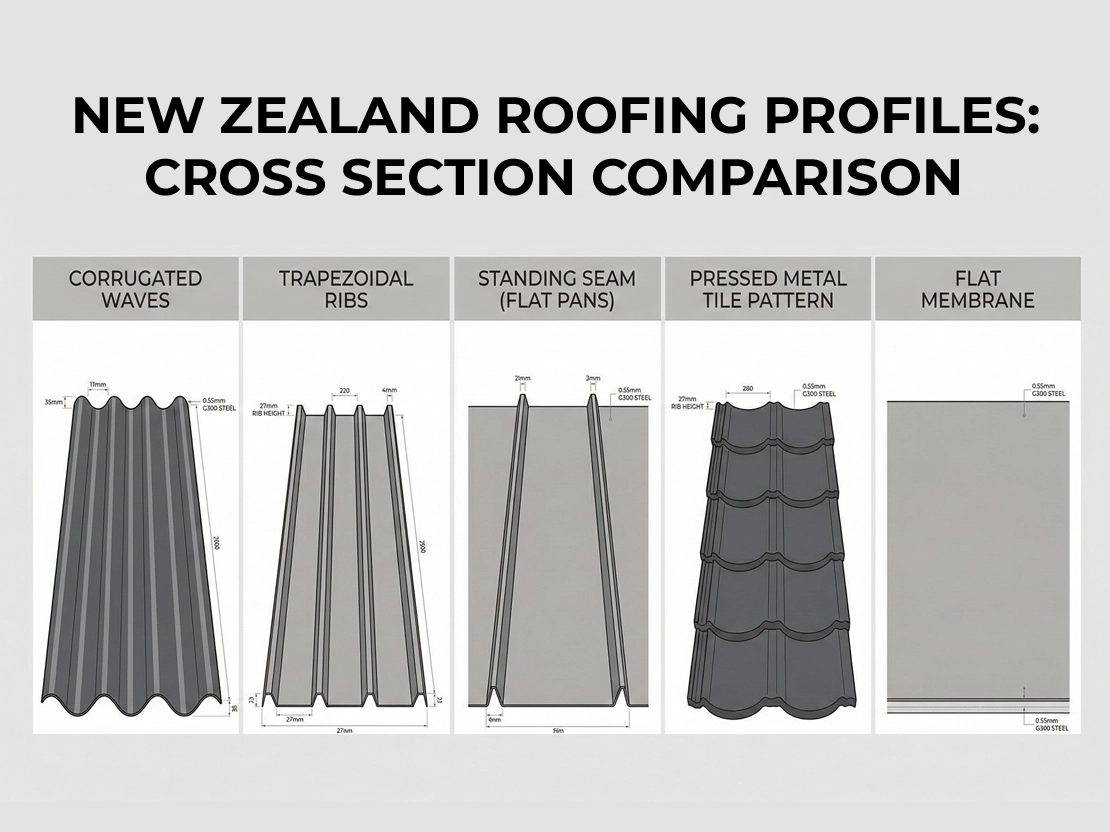
When you look at roofs across the country, you will see a few distinct shapes. Each one serves a different purpose. Understanding these shapes helps you decide what fits your budget and design goals.
Corrugate Classic Roofing Iron Profile
The corrugated profile is the traditional "wavy" pattern seen on villas. Its S-wave shape gives thinner steel greater strength, making it one of the best roofing profiles in NZ for authentic heritage renovations. However, as it relies on gravity to shed water, it requires a minimum pitch of 8 degrees and is not suitable for ultra-low slopes.
Trapezoidal / 5-Rib Profiles
Trapezoidal profiles feature crisp, angular ribs with wide, flat pans, typically found on commercial buildings and modern homes. The high ribs act like stiff beams, allowing the sheets to span wider distances between support timbers. This efficiency handles water runoff well and reduces structural costs, making it a practical choice for large roof areas.
Tray & Standing Seam Profiles
Standing seam and tray systems define the high-end architectural look with their long, flat pans and raised vertical edges. Unlike other profiles, they use concealed clips instead of visible screws, allowing the metal to expand thermally without stressing the fasteners, minimising the risk of leaks.
Pressed Metal & Concrete Tile Profiles
Many homeowners prefer the aesthetic of stone or clay tiles but want the benefits of steel. Pressed metal profiles are stamped to mimic individual tiles or shakes, offering that classic visual weight without the heavy load. This places less stress on the timber structure while maintaining a traditional suburban character.
Low-Slope Membrane & Flat Roof Profiles
While not strictly metal roofing profiles in NZ, membranes are crucial for modern "box" designs with flat roofs. Once the pitch drops below 3 degrees, metal sheets drain too slowly, leading to rusting.
Matching Roofing Profiles to NZ Homes, Styles and Locations
Your roof accounts for about 30% of your home's exterior, so picking the wrong roofing profiles in NZ can disrupt the building's visual harmony. At IG Roofing, we always advise matching the profile to the home's era and the specific environment in which it sits.
Modern Architectural Homes

For contemporary designs, the goal is usually minimalism. Architects love standing seam profiles because they complement materials like cedar or concrete.
- Clean Visuals. Unlike screw-fixed systems, standing seam roofs lack thousands of visible fasteners for a pure, uninterrupted flow from the ridge to the gutter.
- Design Flexibility. Modern homes feature parapets or curved sections. We can fabricate malleable standing-seam profiles to wrap neatly around these distinct features.
- Low-Slope Capability. Standing seam systems with mechanical locks, are among the best roofing profiles in NZ for keeping water out at the low pitches common in modern design.
Villas, Bungalows and Character Homes
If you are renovating a 1920s bungalow, a sharp trapezoidal profile often looks too industrial. The standard corrugated profile is usually the right choice to maintain street appeal.
- Respecting History. Standard corrugate handles the steeper pitch perfectly and mimics the original iron used a century ago.
- Handling Extensions. For new extensions requiring a lower pitch, a deeper corrugated profile is suggested. It keeps the heritage "wave" look but holds more water volume for safety on flatter sections.
Coastal vs Inland vs High Wind Zones
New Zealand’s geography dictates which roofing profiles in NZ will survive if you are dealing with salt spray or gale-force winds.
- Coastal Environments. Within 500 metres of the sea, salt spray is the enemy. We recommend Aluminium or Zinc standing seam systems here because they have no exposed screw holes where corrosion starts.
- High Wind Zones. In exposed areas, wind uplift is a powerful force. While trapezoidal profiles offer good resistance, a properly installed standing seam roof is superior as clips hold the sheet down along its entire length.
Performance Factors That Define the Best Roofing Profiles in NZ
It is easy to focus on aesthetics, but a roof is primarily a functional shield. Several technical factors determine which roofing profiles in NZ will function over the next years:
Lifespan, Durability and Maintenance
Profiles with deep ribs are naturally stiff and resist denting from foot traffic. Flat tray profiles demand a robust substrate, such as plywood, to withstand impact. Maintenance is also key. Profiles with many nooks can trap corrosive salt and dirt. Standing seam profiles are often self-cleaning because rain washes the flat pans easily. This reduces the manual washing needed to maintain your warranty, an advantage for homeowners.
Weather Performance: Pitch, Wind and Water-Shedding
Every profile has a "water carrying capacity." Deep trapezoidal profiles act like drains, carrying large volumes of water without spilling. This allows them to be used on roofs as flat as 3 degrees.
On flatter roofs, water can travel up between sheets due to surface tension. The best roofing profiles in NZ for low slopes feature built-in anti-capillary grooves. These small channels relieve water tension so the roof remains watertight even in driving rain.
Energy, Noise and Comfort
Your profile choice affects acoustic comfort. Rain hitting a flat, taut surface can be loud, but using a solid plywood substrate underneath significantly dampens the noise.
Thermal movement is another factor. Metal expands when hot. Long sheets fixed with screws often creak as they move against the timber. Floating systems, like the standing seam clips allow the metal to glide silently as it changes temperature, creating a quieter home.
Sustainability & Material Efficiency
Sustainability is a priority for many Kiwis. Some roofing profiles in NZ are more material-efficient. For example, flat trays use less steel surface area than wavy corrugated sheets.
Furthermore, premium materials such as Zinc and Copper are fully recyclable and have lifespans exceeding 80 years. This means you avoid sending waste to the landfill every few decades.
How to Choose the Right Roofing Profile for Your Project
Making the final call requires balancing your wants with the technical realities of your building. We have broken this down into a simple framework to help you decide among the various roofing profiles in NZ.
Key Questions to Ask Before You Pick a Profile
Before choosing a roofing profile, you need to assess the practical limitations of your project. Asking the right questions early helps filter down the thousands of options to the few that actually work for your home.
New Build or Re-roof?
New builds offer more freedom to design the structure around the profile you want. Meanwhile, re-roofing often limits you to roofing iron profiles in NZ that fit the existing timber spacing and the current house's slope.
What is the Roof Pitch?
This is the biggest technical constraint. If your pitch is under 8 degrees, standard corrugate is usually unsafe to use. You will need to look at trapezoidal or tray options that handle water better at low angles.
Where is the Property Located?
If you are in a "severe marine" zone or a high-wind area, the environment dictates the choice. Coastal homes need profiles compatible with non-ferrous metals like aluminium, while exposed hilltops need profiles with superior wind uplift resistance.
How Complex is the Shape?
Does the roof have many valleys, dormers, or skylights? Some profiles are notoriously difficult to flash neatly around complex junctions. Simpler profiles work better for complicated roof shapes to minimise leak risks.
What are Your Aesthetic Goals?
Are you trying to match a classic villa or create a modern statement? Your preferred profile sets the tone. A modern standing seam profile might look out of place on a heritage bungalow, just as corrugated might clash with a concrete modern box.
What is the Budget and Timeline?
Standard profiles are generally cheaper due to simpler installation. But if you plan to stay in the property for decades, investing in higher-end architectural trays offers better long-term value by reducing costs.
Simple Decision Pathway
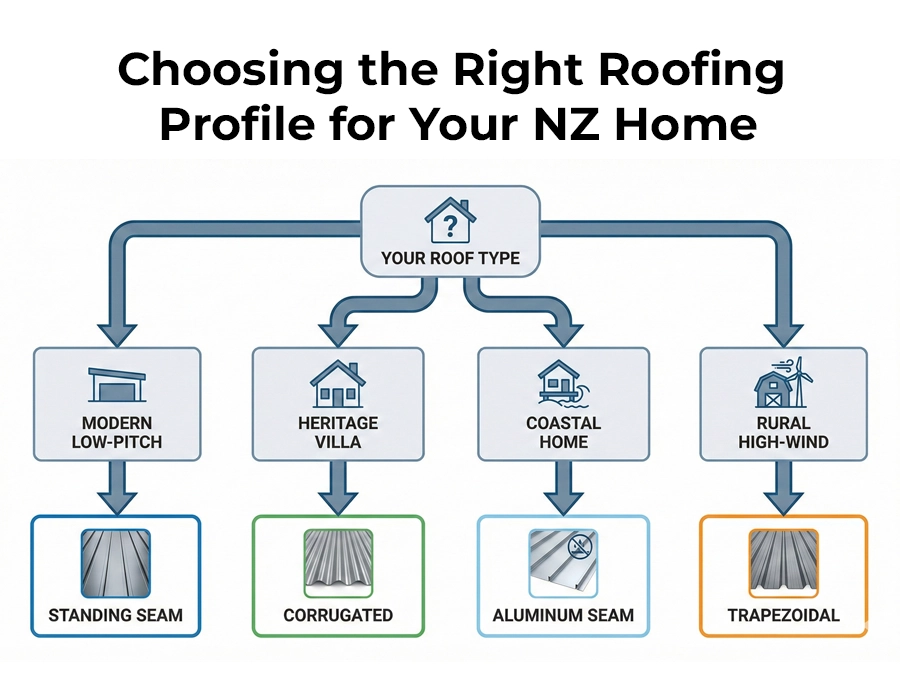
Here is a quick reference guide to point you toward the right category for your specific needs:
- For low-pitch, modern design: Consider tray or standing seam systems. These are engineered to handle water safely at lower angles while providing that sleek, fastener-free finish.
- For classic villas or bungalows: Stick to corrugated or tile profiles. These maintain the home's heritage character and are designed for steeper pitches.
- For simple gable in a high-wind rural area: Look at strong long-run roofing profiles NZ, like trapezoidal sections. They offer the best span capabilities and robust wind resistance for large surface areas.
- For Coastal sanctuary: Choose Aluminium Standing Seam. The profile avoids screw corrosion, and the material naturally resists the aggressive salt air.
When to Involve a Specialist Roofing Contractor
Ideally, you should speak to a specialist early in the design phase. We often see plans where an architect has specified a profile that technically won't work with the roof's pitch or drainage design. This leads to expensive redesigns later in the project.
By consulting with NZ roofing profile experts early, we can suggest subtle tweaks to the pitch or structure that let you use the profile you prefer. We can also help you select the exact material grade to ensure the manufacturer's warranty will be valid for your specific site address. This proactive approach saves time and money.
Why Standing Seam and Tray Profiles Are Growing in NZ?
We are seeing a massive shift toward standing seam systems in the local market. It is no longer just for high-end mansions. Homeowners are now realising that standing seam is one of the best roofing profiles in NZ for long-term value due to their water security.
- Eliminating Weak Points. Traditional metal roofing profiles in NZ rely on rubber washers under screw heads to keep water out. Over 15 years, UV rays degrade these washers, leading to cracks and inevitable leaks.
- Watertight Skin. Standing seam eliminates this risk entirely because the fasteners are concealed beneath the metal. The sheets are mechanically folded over each other for a watertight skin.
- Smart Investment. While the initial cost is higher, the dramatic reduction in maintenance and leak risk makes it a smarter financial move over the life of the building.
Costs, Quotes and Working With a Specialist Roofer
Budget is always a major factor. However, it is important to understand why prices vary so wildly between different roofing profiles in NZ.
What Actually Drives Roof Cost?
The cost is rarely just about the price of the steel coil, and several hidden factors dictate the final quote:
- Complexity. A simple gable roof is fast to install. A roof with multiple hips, valleys, and wall claddings takes three times as long because of the complex cutting and folding needed.
- Material Waste. Some profiles have fixed widths. If your roof dimensions don't match exactly, there will be more cut-off waste.
- Substrate Requirements. Architectural profiles require a plywood substrate and breathable building paper. This adds to the material cost but significantly improves noise reduction and durability.
Why Installation Quality Matters More Than Profile Alone
You can buy the most costly copper tray profile in the world, but if it is installed poorly, it will fail. We often see this with cheaper quotes where inexperienced installers use the incorrect metal combinations, leading to corrosion. Poorly fixed sheets can also buckle and make loud noises when the sun hits them.
The best roofing profiles in NZ only perform as well as the hands that install them. Real water-tightness comes from proper detailing at the ridges, flashings, and penetrations. When you hire a specialist, you are paying for the assurance that these critical junctions are handled correctly to prevent leaks.
How IG Roofing Helps Homeowners, Architects and Builders
We at IG Roofing approach every project as a partnership rather than a simple transaction. It starts with a detailed consultation, during which we review your architectural plans to identify the best roofing profiles in NZ for your specific site conditions.
Because we fabricate our trays and flashings in-house, we are never limited to standard catalogue parts. We custom-make complex components to solve tricky waterproofing details that standard metal roofing profiles in NZ struggle to handle.
Securing Your Home’s Future with the Right Profile
Choosing the right shape is about more than just street appeal but is about shielding your largest asset with a system built to last. Whether you prefer the classic look of corrugate or the clean lines of standing seam, your decision tells the future performance of your home.
At IG Roofing, we are dedicated to delivering premium solutions that merge superior craftsmanship with practical durability. We don't just supply a product; we engineer a defence against the weather tailored specifically to your building.
If you are ready to combine aesthetics with high roofing performance, contact us today to discuss your project. Let us help you navigate the options and deliver a result that proves expert engineering is the key to selecting the best roofing profiles in NZ.
FAQs About Roofing Profiles in NZ
What are the most common roofing profiles in NZ?
Corrugate and Trapezoidal are the traditional standards. However, standing seam and tray profiles are rapidly becoming the preferred choice for modern homes due to their superior weather tightness and sleek aesthetic.
Which roofing iron profiles in NZ are best for coastal homes?
While material choice like aluminium or zinc is critical, standing seam is the superior profile. It has no exposed screws that can rust in salt air, making it far more durable than standard screw-down systems.
Are metal roofing profiles in NZ better than tiles for modern builds?
Generally, yes. Metal is significantly lighter, reducing structural strain during earthquakes. It also allows for much lower pitches, giving architects the freedom to design the flat, modern rooflines that tiles cannot achieve.
How do I choose the best roofing profile in NZ for my home?
Start with your roof pitch. If it is under 8 degrees, you need a tray or trapezoidal profile. For steeper roofs, corrugated works well. Always consult a specialist to ensure your choice meets Building Code requirements for your specific location.